
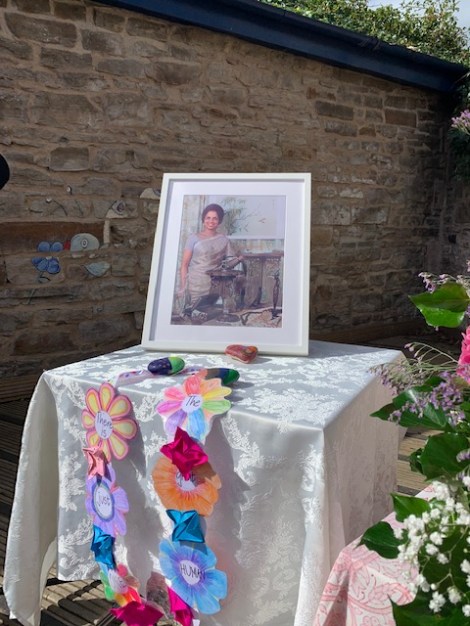
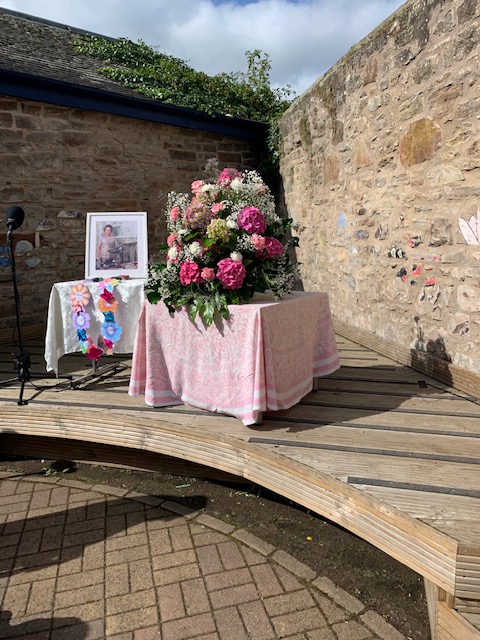
Thursday, 20.8.2020, was a special day in the life of our school. We celebrated exactly 50 years since Mrs Saroj Lal came to teach at South Morningside. She was an inspirational woman who fought hard to promote social justice and equality over many years.

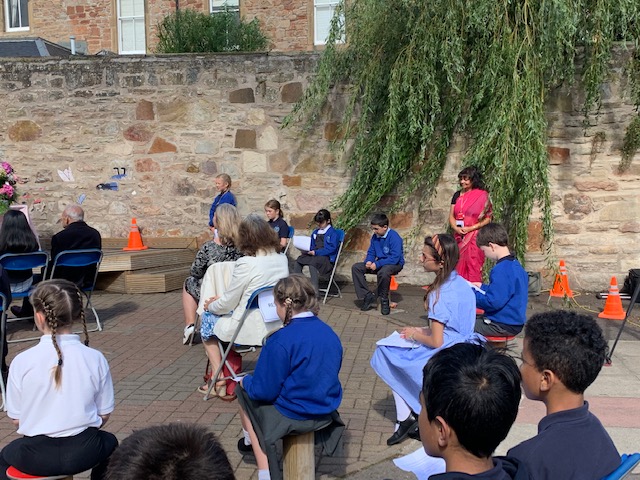
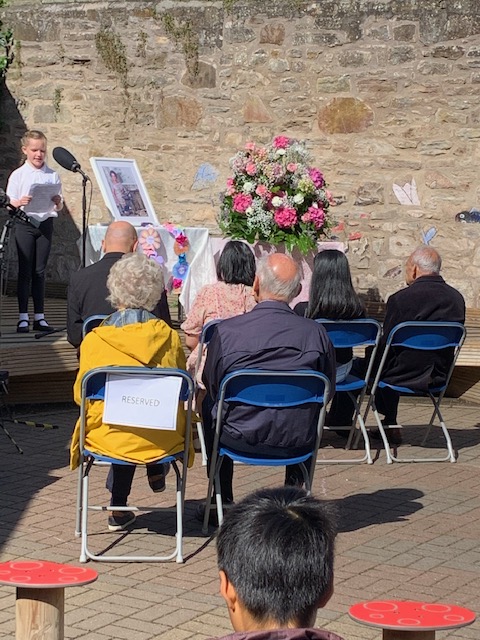
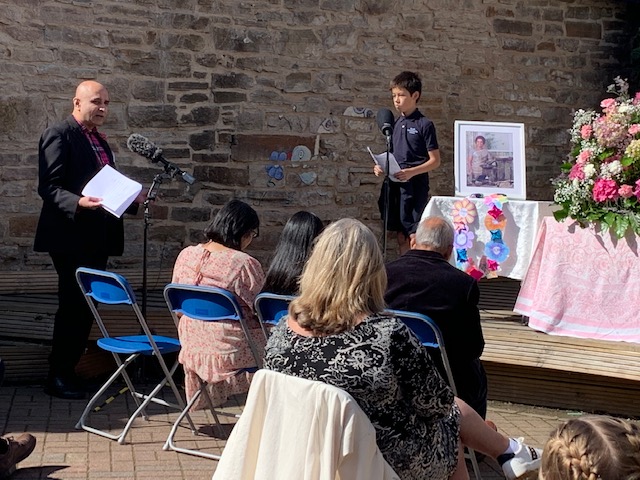
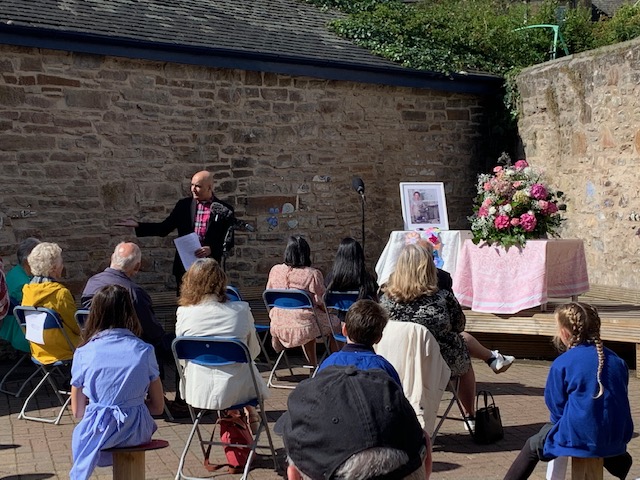
We would have loved to have a whole-school assembly to mark this event, but as this was not possible in these Covid times, a select group of pupils had put together a lovely mini-assembly.
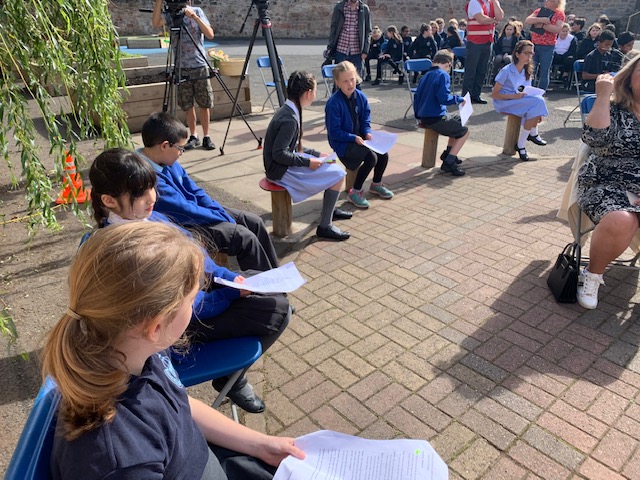
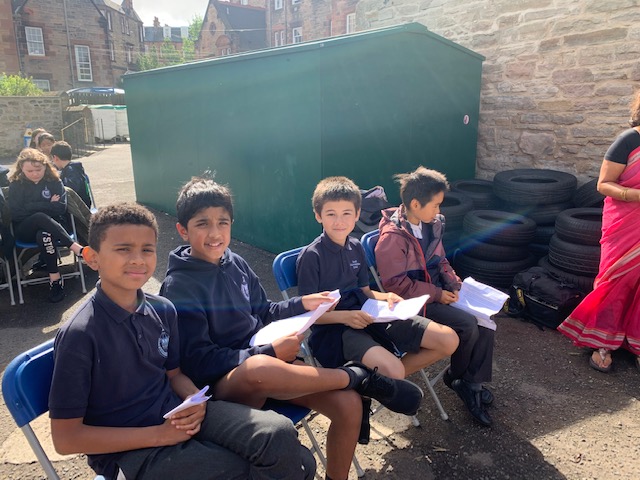
Representatives from all our P4-7 classes had worked together (socially distanced, of course!) to prepare an assembly that told us all about the life and achievements of Mrs Lal.
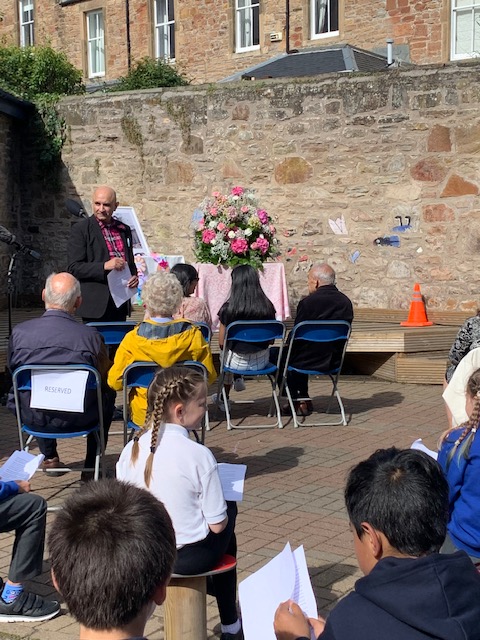
Special guests at the assembly, that took place in our outdoor classroom, were Mrs Lal’s family, husband Mr Amrit Lal, daughter Kavita, son Vineet and granddaughter Isha, her close friends Gillian and Arlene and former South Morningside staff Mrs Stephen and Mrs Mieras (who had taught our P7 teacher Mrs Jones when she was a pupil at SMPS!)
After the children told the assembly about Mrs Lal’s impressive achievements, some of the P6s and 7s interviewed Mr Vineet Lal – they had come up with interesting, topical questions and the answers were equally thoughtful and thought-provoking. The class reps then went back to their own classes to share with their peers all they had learnt. We will be revisiting important issues that have been raised through our learning about Mrs Lal in our future learning.
The Life and Achievments of
Mrs Saroj Lal
by
Benjamin (P4A), Heidi (P4B), Hajra (P4C),
Poppy (P5A), Maisie (P5B), Agustin (P5C), Lily (P5C),
Jake (P6A), Sophia (P6B), Esther (P6C)
Isla (P7A), Alexander (P7B), David (P7B), Joshua (P7B), Nicholas (P7C)
Today is a special day for all of us here, because we are celebrating 50 years since a new teacher came to our school, South Morningside: A new teacher named Mrs Saroj Lal.We have heard from pupils that were in her class what a lovely teacher she was, she was very kind and creative and loved to teach art.
Mrs Lal noticed that when she was out and about in Edinburgh, some people were not treating her equally because she was a woman, and because she was originally from Asia. Some people were being racist and unfair.
We imagine that Mrs Lal could see that the children at school were not racist, her class didn’t mind what her gender and colour were, so she realised that racism and inequality are NOT things people are born with, She saw that there was a need to change the way people think and behave and the way they treat others, and so she got to work!
After teaching at South Morningside for three years, Mrs Lal went on to work with the government and the council, with public and private groups and charities, in order to help make our community safer and fairer for everyone, no matter what their gender, race or religion.
We realised that she continued working for almost 50 years in many different ways but all to do with stopping racism and inequality.
We tried to each choose one achievement that we thought was very special. There was a lot to choose from so we will not be mentioning EVERYTHING Mrs Lal did to make our world a better place, but here is a selection in no particular order:
She was the Director of the Lothian Racial Equality Council where she could organise events and opportunities for people from different groups to meet in order to create a better, stronger community together. Her work there built up social equality in Scotland.
Mrs Lal noticed that there were no services offered to elderly people from ethnic groups and she worked with government departments to set up these services including starting the Milan senior welfare organisation.
Mrs Lal worked with the police, to make sure that when there was a racist attack this would be treated seriously. Sometimes people didn’t want to listen to what she had to say because she was a woman and most of the police force were men, but she didn’t give up! She was a feminist and worked hard to make sure that women got the same rights as men did.
Mrs Lal was a Justice of the Peace meaning she acted as a judge in a court of law. She was the first Asian woman to do this important job.
It’s not really surprising that she did this. She continued in her father’s footsteps, as he was a freedom-fighter in India, and a politician who struggled for independence, democracy and equality.
Mrs Lal noticed that in hospitals there wasn’t any special help for people from minorities for example if they needed special food because of religious reasons, or could not speak the language very well because they were new immigrants in Scotland. She worked hard with the organisations that ran hospitals, hospices and prisons, to make sure that this improved.
Because she was a teacher, she could also visit schools to chat to pupils about how to make our community fairer and how it was important to accept everyone, no matter what their faith, race or gender was. This was challenging, because even some of the books and resources used in schools at that time were written in a biased or racist way, and Mrs Lal campaigned to have this changed.
Reading about Mrs Lal’s life, we were interested to see that she worked not only with the government and public organisations to encourage equal opportunities and fairness, but also within the community, for example setting up a course at Telford college for young women to continue their studies so that they can go to university or get better jobs rather than staying at home.
We were really interested to learn about Mrs Lal, about her time at South Morningside and all the important work she did after she left our school.
We know that Scotland is a fairer place to live in now because of the work she has done, but we can also see that there are still situations of inequality, she has inspired us to think about this and see what we can do too!
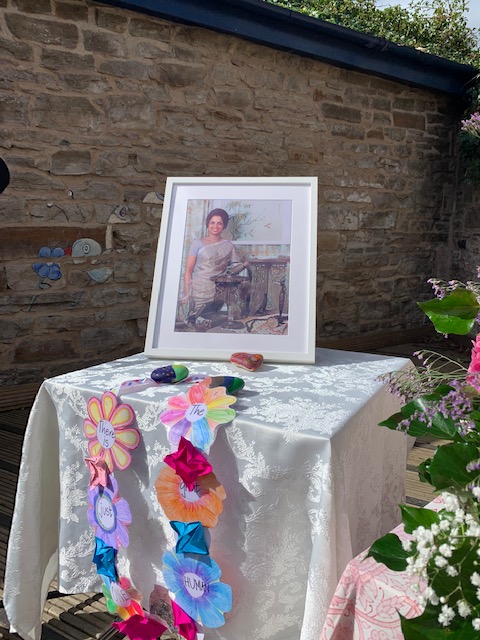
To honour the memory of Mrs Saroj Lal, our class, P7B made this necklace and we would like to gift it to the family.
We thought this slogan fits well with what Mrs Lal worked for:
”There is only one race,
The great human race!“
We are excited to meet Mrs Lal’s family, and we would like to ask you some questions we were wondering about.
Question 1: Was Mrs Lal in the timeline of Nelson Mandela , and was she inspired by him?
Answer (Mr Vineet Lal): Mrs. Lal was working during the 70s and 80s when awareness of apartheid was growing. She was very much against the division in South Africa .Nelson Mandela was in prison during most of this time, and when he was released in 1990 after 27 years in prison, her son remembers Mrs. Lal was at home ironing , with the family all watching TV as the breaking news came through . Winnie Mandela , Nelson’s wife, saluted the crowds, and Mrs. Lal watched and was overjoyed at this huge achievement. She spoke to her children at the time about how very symbolic this moment was after all the years of protests in South Africa. She was specially invited along with her family to see the Edinburgh premiere of the film ‘Cry Freedom’, which was about Nelson Mandela’s life .
Question 2: Was she ever discouraged by any politicians?
Answer: She was a very clever lady, and was able to achieve what she needed to by explaining her views to people in a way that made them feel like they were being listened to. She was assertive without being aggressive , made her points very strongly and was never afraid to speak out. Her working life was through the 70s and 80s, when Margaret Thatcher was Prime Minister, and it was a time during which there was much debate about race and equality, and people’s views started to change dramatically. It was a good time for Mrs. Lal to make the points she believed in. One MP at the time ,David Waddington, made many statements to which Mrs. Lal was very quick to respond! He was Home Secretary for the Conservative party for some time.
Question 3: If she was alive now, what would she think of ‘Black Lives Matter’?
Answer: She would be very supportive of this movement, as she always felt that race equality was very important and should be discussed freely by everyone. She would not have been in agreement over statues being pulled down, as she felt that all history had it’s place and was part of its own legacy. She would want to preserve evidence of the past. She would not have supported any violence .When she worked for the Equality Council, she took a group of teenagers on a trip to Germany, and included a visit to Dachau, the concentration camp, as she felt it was important for young people to know of the suffering of other people inflicted because of race.



 South Morningside Primary School